You spotted water seeping up around your tile, or you pressed on a grout line and felt it give a little. Now you’re hoping it dries on its own so you don’t have to deal with it. That’s a fair hope, and sometimes it’s right. But not always.
Here’s the honest answer to “will water under tiles dry out.” A small surface spill on top of sealed tile? Yes, that usually dries. Water that has worked its way under the tile and into the thinset, grout, or subfloor is a different story. That water has nowhere easy to go. In a Florida home, especially one built slab-on-grade, moisture that sits under tile tends to stay trapped and keep coming back. If it keeps reappearing, something is feeding it.
Surface Water vs. Trapped Water
The first thing to figure out is whether you’re dealing with a one-time event or a supply line that’s still pushing water out.
Surface water dries. If a pet bowl tipped over, the AC drain pan overflowed once, or someone tracked in puddles after a summer storm, you wipe it up and within a day or two the tile feels dry and normal again. That’s a spill.
Trapped water behaves differently. It darkens grout lines. It makes certain tiles feel cooler than the ones around them. You mop it dry and it’s damp again the next morning. Water that returns on its own is not drying out. It’s being replaced. That points to a hidden source, often a pinhole in a copper supply line under the slab or a cracked drain pipe.
Signs It’s a Leak and Not a Spill
You don’t need special tools to notice the early warnings. Walk your floor and look for these:
- One or more tiles that feel warm to bare feet. A warm spot usually means a hot water line is leaking under the slab.
- Tiles that have come loose, sound hollow when you tap them, or rock slightly when you step on them.
- Grout that stays dark and damp in one area while the rest of the floor is dry.
- A musty smell near the floor, or mold creeping up along a baseboard.
- The sound of running water when every faucet and toilet in the house is off.
- A water bill that jumped for no clear reason.
That last one matters a lot here. A lot of Pinellas County homes run heavy irrigation through the summer, so a higher bill gets blamed on the sprinklers. If the bill is high and you have damp tile, don’t assume it’s the lawn. Check the floor first.
Why Waiting Costs You More
It’s tempting to give it another week and see if it dries out. The problem is that hidden water doesn’t sit still. It spreads, and the damage adds up quietly underneath you.
Trapped moisture rots the subfloor under wood-frame floors. On a concrete slab, constant water loosens the thinset bond and your tiles start lifting one by one. Then there’s mold. Our summer humidity already keeps indoor moisture high, and a steady leak under the floor gives mold exactly what it needs to grow inside walls and under cabinets where you can’t see it. A water leak you catch early is a targeted fix. The same leak left for a month can mean replaced flooring, drywall work, and mold remediation.
There’s also the snowbird factor. If you head north for part of the year and leave the house empty, a slow leak can run unnoticed for months. People come home to buckled floors and ruined baseboards from a leak that started as a single damp tile. If you’re closing up a Florida home, it’s worth confirming the floor is dry before you go, not after you get back.
How We Find It Without Tearing Up Your Floor
This is the part homeowners worry about most. They picture us jackhammering the slab or pulling up the whole floor to go hunting. We don’t work that way.
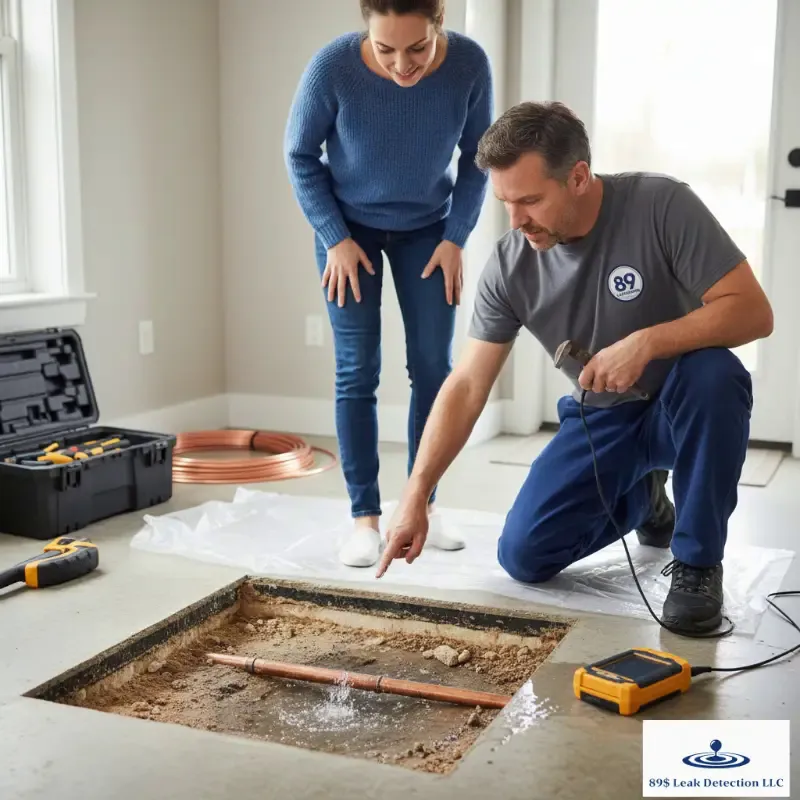
We use non-invasive leak detection. Thermal imaging reads the temperature differences in your floor, so a hot water leak shows up as a clear warm trail under the tile. Acoustic listening equipment lets us hear water escaping a pressurized line through the concrete. Between the two, we pinpoint the exact spot the water is coming from before anyone touches your floor. That means when a repair happens, it’s targeted. No guessing, no opening up three rooms to find one pinhole. If you want the full picture on how we handle leaks below the concrete, see our slab leak detection page, and our water leak detection page covers supply and drain line leaks.
So, will water under tiles dry out for you? If it was a single spill and the area is fully dry within a day or two, you’re probably fine. If the water keeps coming back, a tile feels warm, or your bill climbed, that water is being fed and it won’t dry out until the source is fixed.
Frequently Asked Questions
How long should it take for water under tile to dry?
A surface spill on sealed tile typically dries within a day or two with normal airflow. Water that soaked into the grout, thinset, or subfloor takes much longer and may never fully dry if a hidden line keeps feeding it. If the area is still damp after several days or keeps returning, treat it as a possible leak.
Can a slab leak cause water to come up through tile?
Yes. When a supply line under a concrete slab develops a pinhole or crack, water has to go somewhere, and it often works its way up through grout lines and the gaps under tile. A warm spot on the floor is a common sign of a hot water slab leak. Non-invasive detection finds the exact spot without breaking up the slab.
How much does leak detection cost?
It depends on the type of leak, where it is, and how much area we need to scan. Because every situation is a little different, we give you an exact number rather than a guess. Call (727) 239-0089 or check our prices page for a clear quote before any work begins.
Do I need to find the leak before I can fix it?
Pinpointing the leak first is what keeps the repair small. When you know the exact location, the plumber opens one targeted spot instead of digging up a whole floor to search. That saves time, limits the damage, and lowers the total repair cost.
Don’t Wait for It to Dry on Its Own
If the water under your tile keeps coming back, you have a leak, and waiting only lets it spread. We serve Largo, Clearwater, St. Petersburg, Dunedin, Palm Harbor, Seminole, Pinellas Park, Tarpon Springs and the surrounding area, and we’re available 24/7 for emergencies. Call (727) 239-0089 now, or contact us and we’ll find the source before it does any more damage to your floor.